Monday, May 9, 2022

Soul-body interaction? Rousseau excerpt #1

David Rousseau & Julie Billingham in their Bigelow Institute 2021 prize-winning essay, “On evidence for the Possibility of Consciousness Survival,” address several critical questions. They rely primarily on near-death experience research to formulate their answers.

To preserve naturalism, we have to assume that souls are psycho-physical things and interact with bodies via shared physical properties. This is interesting because it implies that soul-body interaction is mediated by physical fields rather than some other more exotic phenomenon.

The challenge now is to find evidence to indicate that in practice physical forces are involved in this and to give clues about the nature of the force(s) involved. There is suggestive evidence in some NDE cases.

To understand this point, we must think about a living person as a complex system. A system is a structure that functions as a whole in virtue of the causal relationships between its parts [90].

The body is of course a complex system in its own right, but we will focus on the person being a system comprised of a soul and a physical body. When a complex system works well it is sometimes difficult to tell how it works due to the many interdependencies between its parts. Properties can emerge that do not belong to the parts individually but only to the system as a whole.

A feature of complex systems is that if you take them apart, the emergent properties disappear, e.g. the parts of an aircraft cannot fly. To restore the original functionality the parts have to be carefully reassembled so that everything goes together correctly and we end up with a properly and fully integrated system. If in this process parts are lost, damaged or misaligned, the system level properties will be proportionately compromised. The more complex the system, the higher the risk of something going wrong during reintegration.

Given this model, we can now conceptualise the NDE as an event in which soul-body integration is disrupted and then restored when the person recovers. With very rare exceptions, the onset of an NDE is accompanied by a very rapid loss of all control over the body and sensation of bodily states. These are rapidly regained when the NDE ends. NDE experiencers notice this primarily because while they are in the OBE portion of their NDE, they lose the sensation of pain and also find themselves unable to communicate physically with people around their body. The following cases are typical:

“...there was the most searing pain in my arm... Then I was aware that I was losing consciousness and of people rushing around me, knocking things over in the rush to get emergency equipment set up. Then there was nothing – no pain at all. And I was up there on a level with the ceiling...I could see...my body, down there on the bed... the light... I...was being drawn into it...I had the most wonderful feeling of peace... And then suddenly, I was pulled back, away from it, back, slammed into my body again, and back with the pain, and I didn’t want to go” ([64], our emphasis).

“I began bleeding badly after the birth of my daughter and I was instantly surrounded by medical staff who started working on me. I was in great pain. Then suddenly the pain was gone and I was looking down on them working on me. I heard one doctor say he couldn’t find a pulse. Next I was travelling down a tunnel toward a bright light. But I never reached the end of the tunnel. A gentle voice told me I had to go back... I hit the hospital bed with an electrifying jerk and the pain was back. I was being rushed into an operating theatre for surgery to stop the bleeding” ([91], our emphasis).

The very sudden transition from a state of intense pain to complete painlessness at the onset of the NDE, and the immediate return of pain when the NDE ends, is remarkable. Natural endorphins can suppress pain and engender feelings of well-being, but their effects last for hours whereas NDEs last only seconds or minutes [77], so it is unlikely that these effects are due to exclusively bodily mechanisms. This point is reinforced by the cases in which a person can see their body receiving electric shocks, their chest being pounded, their face stroked, and so on, while they themselves feel no relevant bodily sensations [28], e.g. [64], [92]. Greyson reported an interesting case in which the patient could see their body reacting to hallucinogenic drugs while they themselves were mentally lucid [93].

If this model of NDEs as disruptions of soul-body integration is correct, and if the way the connection is made is naturalistic, then we can foresee the possibility that reintegration can sometimes go wrong. This gives us an opportunity to learn about how the system normally works. For complex natural systems, studying failure modes is in general a useful route to understanding them better. For example in medical research, correlating injured or diseased brain parts with functional deficits is an important way of working out which parts of the brain are involved in which cognitive or motor functions.

We can regard a healthy person in ordinary life as closely integrated so that influences can be smoothly exchanged between their mind and their body. If this integration is compromised, then a number of interesting consequences might be expected. Some influences from the mind might no longer reach the relevant parts of the body (e.g. the brain), and so some physical control might be lost, manifesting for example as kinds of paralysis, tremors or coordination problems. Likewise we might expect that information about some states of the body is no longer properly conveyed to the mind, manifesting for example as inattentions to parts of the body or compromises of some kinds of sensory awareness. Medically, such signs are known as ‘neurological deficits’ and assumed to be caused by damage to the brain or nervous system.

Other effects are possible too: influences directed from the soul towards the body might ‘miss their target’ and cause unintended physical changes beyond the body, while attempts by the soul to restore ‘missing’ information about the body might result in the soul mistakenly processing information from bodies other than its own. These latter two problems would manifest as psi phenomena.

Therefore we might anticipate that some people might, after an NDE, exhibit what look like neurological deficits and acquire psychic abilities. Intriguingly, many people who have had NDEs experience exhibit both neurological deficits and new or enhanced psi abilities.

There is substantial evidence in the professional NDE literature for experiencers afterwards having both enhanced functional psychic abilities of the informational type (e.g. spontaneous telepathic impressions) and dysfunctional PK abilities (e.g. unintentional disruptions of nearby electronic equipment).

The neurological deficits are difficult to judge because people may have acquired them due to brain or nervous systems damage caused by the physiological trauma of their NDE incident, for example oxygen starvation. However, there is much general medical evidence for people exhibiting neurological deficits without having any relevant nervous system damage. Medically, these are known as ‘conversion disorders’ and attributed to psychological causes. Such cases are well known in medical practice, where the prevalence of unexplained neurological symptoms typically ranges between 30 and 50% of presenting cases and in some specialities approaches 70%. In orthodox models, the flows of information and influence are between the brain and the body, so it seems mysterious how there can be deficits without physical damage. By postulating a pathway between the brain and the soul, we have opened up the possibility of another mechanism that can malfunction and lead to neurological symptoms.

That said, the disruptive physical psi effects provide the clearest evidential clues, so we will concentrate on those at this stage. NDE experiencers widely report that since their NDE, their presence causes interference, malfunctions or failures in electronic and electro-mechanical equipment such as radios, light sources, cell phones, security systems, toasters, VCRs, TVs, and so on. Here is an example report:

“Watches do not keep time for me. But mechanical things seem to work, even for no reason. If I get too close to FM radio frequencies I raise Cain with reception. Electronic equipment functions strangely around me. I touch electrical appliances to make them work. They start up with my energy. I blew my computer terminal when I got excited. [I] have burned up three cassette recorders [and] one overhead projector”.

Melvin Morse has found that wristwatches were unreliable for 25% of adults who survived childhood NDEs, whereas the same is true for only 4% of adults who have never had an NDE or paranormal experience. In fact, NDErs reported every kind of such effect more frequently than these control groups. Nouri also found that the depth of the NDE correlated with the frequency of these after-effects.

Overall, the electromagnetic nature of these side-effects supports the idea that soul-body interaction is mediated by physical forces and that these involve at least electromagnetic fields. We therefore infer that it is logically plausible that the soul has physical properties in addition to psychonic ones and that soul-body interaction, being based on physical fields, is naturalistic. 


David Rousseau & Julie Billingham, “On evidence for the Possibility of Consciousness survival.” Footnotes have been deleted for these excerpts, but a full paper is available at https://bigelowinstitute.org/contest_winners3.php. David Rousseau is a British systems philosopher, Director of the Centre for Systems Philosophy, chair of the Board of Trustees of the International Society for the Systems Sciences, a Past President of the ISSS, and the Company Secretary of the British Association for the Study of Spirituality.


Sunday, May 8, 2022

Beyond a reasonable doubt: Beischel excerpt #20

When I asked the Windbridge mediums, “Do you believe in an afterlife?” as part of the ‘secret media project’ they knew nothing about, Traci Bray, who worked in and around law enforcement prior to focusing on her mediumship full time, chose to respond this way: “Yes. Were I presented this question in a court room, I would vote along with beyond a reasonable doubt.” But how does scientific evidence fit in a court system? 


Although “they evolved independent of each other to serve similar functions,” the decision-making schemes in both law and science share extensive similarities. For example, the threshold level of probability used by scientists to determine whether or not to reject a null hypothesis can be equated to the ‘standard of proof’ threshold used in a court system to determine whether or not proof beyond a reasonable doubt has been established. Furthermore,  


The structure of the decision situation is the same. Each reflects a true state of reality, which can never be known directly, but must be inferred (that a defendant is innocent or guilty; that a null hypothesis is true or false). 


When scientific findings are used as evidence in court, their “falsifiability,” the extent to which they can be contradicted by observation, is considered “the supreme criterion of authenticity”. 


There are also important differences between law and science. The philosophy stating that ‘law seeks justice and science seeks truth’ has been “announced by many legal authors and applied by several courts” and is based on the fact that courts will exclude evidence (such as that which has been illegally obtained) and science will not (as long as ethical and methodological standards are adhered to). In addition, 


Law relies primarily on what scientists would consider unreliable anecdotal evidence in the form of oral testimony. Science finds its truths by making generalizations from a mass of events. Thus, its focus is often at a population level. In contrast, law seeks to resolve disputes between certain named parties. 


As stated above, this is a significant advantage of mediumship research in establishing evidence for survival: we can assess the phenomenon as demonstrated by multiple skilled participants, using peer-reviewed methods and controlled laboratory conditions, which result in generalizable conclusions; we do not need to rely solely on anecdotal testimony about individual reported experiences. 


Using these comparisons to law, it is clear that the statistically significant scientific evidence described above, collected under randomized, controlled conditions in order to address falsifiable hypotheses, meets if not surpasses what could be considered proof beyond a reasonable doubt in a court system. 


I will leave you with the rest of Traci’s response to my afterlife question: “In my personal life, I am very calm and assured about where at least parts of our soul travel to after the death of the physical body and I have no fear of death itself.” 


Dr. Julie Beischel is the Director of Research at the Windbridge Research Center. She received her PhD in Pharmacology and Toxicology with a minor in Microbiology and Immunology from the University of Arizona and uses her interdisciplinary training to apply the scientific method to controversial topics.  For over 15 years, Dr. Beischel has worked full-time studying mediums: individuals who report experiencing communication with the deceased and who regularly, reliably, and on-demand report the specific resulting messages to the living. References cited in her paper are deleted from these excerpts but a full paper with references is available at the Bigelow website (https://bigelowinstitute.org/contest_winners3.php).  

Saturday, May 7, 2022

Living with the mystery: Beischel excerpt #19

Draw Conclusions from all the Phenomenology Research 
 
From the data collected during the UVO-I, -II, and -III Studies, we can assuredly conclude that what mediums experience as survival psi (communicating with the deceased) is statistically and in most other ways completely different than psychic readings for the living, the placeholder experience for the theoretical situation proposed by the somatic psi explanation. Most convincingly, from the quantitative PCI love data collected during the UVO-III Study under blinded conditions, we can conclude that the different ways mediums describe the two experiences cannot be solely a result of knowing which phenomenon they are talking about and consciously or unconsciously spinning the narrative to fit their needs.
 
And let’s season our hearty science with some tasty logical inference: When we consider the extensive experiences of people throughout history and across the globe who have ongoing relationships with the souls of the deceased, it is actually more logical to land on the survival side of the survival psi/somatic psi argument. It just makes more sense that these 21st century, American mediums are communicating with the deceased, like they say they are doing and like people have been doing for eons all over the world, rather than using psychic functioning to acquire information about the deceased. That is, in addition to the science, the history and ubiquitous nature of communication experiences allow us to infer that survival psi is a better explanation than somatic psi for the source of mediums’ accuracy under controlled conditions. 
 
Draw Conclusions from all the Research 
 
As established above, science is considered the most reliable, valid way of knowing. Based on the science described here, this is what we know: 
 
1.Certain prescreened mediums can report accurate and specific information about the deceased under controlled laboratory conditions that address normal explanations for the source of the information they report.
 
2. The anomalous source of that accurate information must involve psi. 
 
3. The two possibilities are that (a) they are communicating telepathically with the survived consciousnesses of deceased people (survival psi) or (b) they are using precognition, clairvoyance, or telepathy with the living to gather information about the deceased (somatic psi).
 
4. Twenty laboratory-tested mediums and over 100 self-identified mediums have reported that survival psi and psychic readings for the living (the surrogate for the somatic psi theory) feel different. Extensive qualitative and statistically significant quantitative phenomenological research supports their claims. 
 
5. Quantitative findings from blinded readings performed by laboratory-tested mediums for deceased and living targets specifically demonstrated that, at the very least, love is experienced to a greater degree during mediumistic readings for the deceased compared to during psychic readings for the living.
Taken together, these facts provide the best available evidence for the survival of human consciousness after permanent bodily death. As we have stated all along this journey, 
 
"With a combination of evidence for AIR and support that the use of survival psi during the mediumship process is phenomenologically or physiologically different from somatic psi under blinded conditions, it could be inferred that survival is the best explanation for the data."
 
The most logical explanation for the collection of data described above is that people can survive the death of their bodies and can communicate with mediums.
 
But how can that be? 
 
 While these conclusions may seem like heresy or profanity to some, controversial ideas can be the “key to scientific progress” and keeping them “at the scientific margins is strikingly at odds with the potential public impact such work could have”.
Moreover, competent scientists are comfortable with uncertainty and mystery. In Brida by Paulo Coelho, another novel I happened to be reading while writing this, Brida’s boyfriend explains to her the classic physics double-slit experiment that demonstrates that particles can inexplicably act like both particles and waves simultaneously. “You may not believe it, but it’s true,” he says. “It’s something scientists know but can’t explain.”
 
Brida asks, “What do scientists do when confronted by these mysteries?”
“They enter the dark night,” he responds. “We know that the mystery won’t ever go away and so we learn to accept it, to live with it... It isn’t explanations that carry us forward, it’s our desire to go on”.
 
Here’s to living with the mystery. 
 

Dr. Julie Beischel is the Director of Research at the Windbridge Research Center. She received her PhD in Pharmacology and Toxicology with a minor in Microbiology and Immunology from the University of Arizona and uses her interdisciplinary training to apply the scientific method to controversial topics. For over 15 years, Dr. Beischel has worked full-time studying mediums: individuals who report experiencing communication with the deceased and who regularly, reliably, and on-demand report the specific resulting messages to the living. References cited in her paper are deleted from these excerpts but a full paper with references is available at the Bigelow website (https://bigelowinstitute.org/contest_winners3.php).

Friday, May 6, 2022

Experiences of mediums: Beischel excerpt #18

Julie Beischel writes in “Beyond Reasonable: Scientific Evidence for Survival,” her prize-winning essay in the Bigelow Institute for Consciousness Studies competition:

WCRM Laura Lynne Jackson

 In a 2017 online survey study, one of the questions we asked the medium participants (14 WCRMs, 113 self-identified; n = 127) was, “What is your explanation for why you are a medium?” Love was mentioned in some of the responses. For example, one participant described their purpose as, “To help others. To bring Light and Love where there is darkness... We are all eternal beings of Light and Love, we can never be destroyed.”

A different survey question asked, “In your own words, describe your spirituality as it is related to your mediumship.” Qualitative analysis of the responses revealed a major theme that involved love. Participants’ statements included:

“I believe that life continues. Energy changes form but it never lessens or increases. I believe in a light/love in the universe, whatever we call it. People move on in a new form rather than dying and no longer existing.”

“...what I believe in is... levels of ascension and learning of dark to light based on soul growth, with love carrying over each lifetime, until you are purely good and at peace with the universe.”

Because of these types of statements, we specifically predicted that love would be experienced to a greater degree during the blinded readings for deceased targets when compared to blinded readings for living targets. Our prediction was confirmed when this specific analysis demonstrated a statistically significant difference in PCI love scores.

Let’s really take that in and metabolize it: Under controlled conditions, the mediums in this study felt more love when performing a blinded reading for a deceased target than they did when performing a blinded reading for a living target. All the mediums had was a first name. And dead people brought love to the party.

After collecting the UVO-III Study data, I also informally interviewed the WCRMs about their general experiences during psychic functioning and survival psi (mediumship readings). Referencing the overall differences between the two experiences, the WCRMs noted:

“It’s very different. It’s like listening to someone versus looking myself.”

“In a mediumship reading, it feels like someone is talking
to me. With psychic readings, it’s information about someone.”

“With mediumship, I get to meet new people all the time. Psychic information is boring.”

The mediums’ comments also related to differences in how they actually perceive the information:

“With psychic information, I have to ‘squint’ from the inside out like to focus on something in the distance. When I do mediumship, it’s not squinting at all. It’s just receiving.”

“There’s a heaviness around the sensation of living people; like air compared to helium. The auditory aspect is much sharper when I’m perceiving someone who is deceased. Their energy is more like helium.”

These statements are similar to a finding from Roxburgh and Roe* who interviewed 10 Spiritualist mediums about their experiences and qualitatively analyzed the responses. The metaphor of energy was used by one participant “to make the distinction between a psychic link that is ‘static’ and ‘dense,’ and spirit communication that is ‘vibrant’ and ‘lighter’” (p. 33).

One WCRM discussed the spatial orientation of the information in response to my query:

“Somebody from the other side steps in to communicate on the right side of the ‘movie screen’ in my mind’s eye. Psychic information from the living comes to the left-hand side of the screen. The dad’s side comes on the bottom right-hand side and the mom’s side comes in the upper right-hand side of the screen.”

Several WCRMs discussed differences in their physical sensations:

“The physical feeling I get is a tingling or a pressure in my head when the medium stuff starts to happen or when they’re entering the room. I don’t get that at all during a psychic reading.”

“Physically, mediumship charges me up. It’s like having eight cups of cappuccino. It’s like a buzzing. I’ve learned I can’t do reading too late at night because I’ll just be up all night. It’s like a super-charge. Psychic information doesn’t do that.”

One WCRM spoke specifically about love:

[In mediumship readings,] “there’s more of a loving feeling. When I connect with somebody on the other side, everything’s happy and great. I feel like I don’t know who I am any more. I lose myself. My identity is gone. Who cares who I am? I’m just part of the universe; I’m part of love energy... It’s like I’m connecting with that sacred love, that universal love, on the other side even though it’s just in little tiny bits for a moment. Reading psychically is very different. I’m more aware of myself. It’s more grounded. It makes me feel alone.”

The UVO-III data collected under blinded conditions and these additional informal interview responses support the conclusions of the previous phenomenological research studies: mediums know what acquiring psychic information about the living feels like and communicating with the deceased feels different.


*Roxburgh, E. C., & Roe, C. A. (2013). “Say from whence you owe this strange intelligence”: Investigating explanatory systems of spiritualist mental mediumship using interpretative phenomenological analysis. International Journal of Transpersonal Studies, 32(1), 27– 42.


Dr. Julie Beischel is the Director of Research at the Windbridge Research Center. She received her PhD in Pharmacology and Toxicology with a minor in Microbiology and Immunology from the University of Arizona and uses her interdisciplinary training to apply the scientific method to controversial topics. For over 15 years, Dr. Beischel has worked full-time studying mediums: individuals who report experiencing communication with the deceased and who regularly, reliably, and on-demand report the specific resulting messages to the living. References cited in her paper are deleted from these excerpts but a full paper with references is available at the Bigelow website (https://bigelowinstitute.org/contest_winners3.php).


Thursday, May 5, 2022

Results of 10 WCRMs*: Beischel excerpt #17

Julie Beischel writes in “Beyond Reasonable: Scientific Evidence for Survival,” her prize-winning essay in the Bigelow Institute for Consciousness Studies competition:


UVO**-III Study: Quantitative Analysis 


For the UVO-III Study, our aim was to see if mediums’ reports of differentiating between the two psi experiences would hold up under blinded and controlled laboratory conditions. The goal was to see if empirical research findings would mirror what was found during the previous qualitative and quantitative phenomenological studies. (Are you on the edge of your seat?!) Again, because somatic psi is a theoretical construct and is not an experience that mediums report having, it cannot be requested of participants during an experiment. Therefore, psychic readings for the living serve here again as the best surrogate experience to include during research. The UVO-III Study examined—under randomized, counter-balanced, and blinded conditions with prescreened participants—the phenomenology of mediumship readings for deceased targets in which survival psi is used and of psychic readings for living targets in which ‘regular’ psi (i.e., telepathy, clairvoyance, and/or precognition) is used. 


The UVO-III Study examined the experiences of 10 WCRMs who had previously demonstrated AIR (anomalous information reception; reporting accurate information about the deceased under blinded conditions with no feedback or any shenanigans). The 10 WCRMs participated in two counter-balanced experimental conditions: a blinded reading for a living target and a blinded reading for a deceased target. After each condition they completed a questionnaire about their experiences. The reading conditions were recorded phone sessions in which only the blinded medium and a blinded experimenter were on the phone.


At the start of each reading, the WCRM was given the first name of a target person by an experimenter. Targets could be living or could be deceased. WCRMs had been given these instructions at the beginning of the study: “You will be randomly assigned two readings. Each of the readings may be a psychic reading for a living target or a mediumship reading for a deceased target. That is, you may read for two living people, two deceased people, or one of each.” When directly asked by my scientifically-minded research participants how we would see any differences in conditions when they might read for two living or two deceased targets, they were told that combining the results from all the participants would allow us to see differences when averages were compared. In reality, they each read for one living target and one deceased target. The experimenter on the phone with them was also blinded to which names were living targets and which were deceased. 


After being given the first name of a target, the WCRMs were asked questions about the target’s physical appearance, personality, and hobbies and asked to provide any other relevant information. The questions were identical regardless of whether a target was living or deceased. This ensured that the medium and the experimenter stayed blinded to whether a given target was living or deceased. 


During 19 of the 20 readings in the UVO-III Study, the WCRM mentioned their impressions regarding whether the named target was living or deceased. In a statistically significant portion (14 of 19, 74%), those impressions were accurate (50% is what could be expected from guessing). Six of the 10 WCRMs were able to accurately determine the status of the targets in both of their readings.


After each reading condition, the WCRMs completed a questionnaire called the Phenomenology of Consciousness Inventory about their experiences. The WCRMs were told, “It is essential that you simply attempt to answer each question during the reading and then fill out the PCI about that experience.” The PCI is a widely used valid and reliable 53-item questionnaire that quantifies 26 different aspects of consciousness grouped into 12 major and 14 minor dimensions. WCRMs also completed PCIs after an initial baseline condition and after a control condition.


When all four conditions (baseline, control, living target reading, deceased target reading) were compared statistically, differences were seen in the PCI scores reflecting the experiences of the reading conditions as compared to the scores reflecting the experiences of the baseline and control conditions. That is, the psi readings induced experiential situations that were quantitatively different from the WCRMs’ normal, usual waking consciousness (represented by baseline and control conditions). Similar to previous research, the reading conditions created changes in the mediums’ level of mental imagery, in the focus of their mental attention, and in their subjective sense of the passage of time. 


The two different types of psi readings, however, were similar to each other in their PCI profiles. And this is what we expected. Psi is an anomalous situation and its variants can only be so different. Also, the PCI was not designed to capture differences between mediumistic and psychic experiences. It may not be able to measure the “phenomenological variables that are fundamental constituents of mediumistic states”. We may need to specifically develop an instrument or method that can capture the nuanced differences between mediumistic and psychic experiences in order to accurately capture the holistic nature of psi. However, one of the dimensions the PCI does quantify is love and that is important here. 


Kim Russo

Mediums anecdotally talk about feelings of love related to mediumship readings. When, years ago, I informally asked the mediums on my team about their experiences, their responses often focused on love. For example, Joanne Gerber reported that, “The energy of love is the bond between the physical and spiritual worlds”. Kim Russo described mediumship readings as including “many emotions running through my body... especially love. The emotion of love comes to me in the strongest way".


When all four conditions (baseline, control, living target reading, deceased target reading) were compared statistically, differences were seen in the PCI scores reflecting the experiences of the reading conditions as compared to the scores reflecting the experiences of the baseline and control conditions. That is, the psi readings induced experiential situations that were quantitatively different from the WCRMs’ normal, usual waking consciousness (represented by baseline and control conditions). Similar to previous research, the reading conditions created changes in the mediums’ level of mental imagery, in the focus of their mental attention, and in their subjective sense of the passage of time. 


The two different types of psi readings, however, were similar to each other in their PCI profiles. And this is what we expected. Psi is an anomalous situation and its variants can only be so different. Also, the PCI was not designed to capture differences between mediumistic and psychic experiences. It may not be able to measure the “phenomenological variables that are fundamental constituents of mediumistic states”. We may need to specifically develop an instrument or method that can capture the nuanced differences between mediumistic and psychic experiences in order to accurately capture the holistic nature of psi. However, one of the dimensions the PCI does quantify is love and that is important here. 


* WCRMs stands for Windbridge Certified Research Mediums


** UVO stands for sUrvival psi Vs sOmatic psi examinations


Dr. Julie Beischel is the Director of Research at the Windbridge Research Center. She received her PhD in Pharmacology and Toxicology with a minor in Microbiology and Immunology from the University of Arizona and uses her interdisciplinary training to apply the scientific method to controversial topics. For over 15 years, Dr. Beischel has worked full-time studying mediums: individuals who report experiencing communication with the deceased and who regularly, reliably, and on-demand report the specific resulting messages to the living. References cited in her paper are deleted from these excerpts but a full paper with references is available at the Bigelow website (https://bigelowinstitute.org/contest_winners3.php).

Wednesday, May 4, 2022

Mediums discern afterlife: Beischel excerpt #16

Julie Beischel writes in “Beyond Reasonable: Scientific Evidence for Survival,” her prize-winning essay in the Bigelow Institute for Consciousness Studies competition: 


UVO-II* Study: Qualitative and Quantitative Analysis 


We also wanted to know if the experiences of the WCRMs on our team were representative of those from a broader group of mediums. What did other mediums have to say? To gather this data, we designed an online survey that was completed by 14 WCRMs and 113 self-identified secular mediums (individuals who do not practice mediumship or spirit communication as part of an organized religion). The 127 participants were first asked “Can you tell the difference between communication from the deceased and psychic information about the living?” Roughly 97% of the participants responded “Yes” to this question (n = 123). This data point confirmed what we had learned from the pre-screened WCRMs: most mediums can tell the difference between survival psi and ‘regular’ psychic functioning. 


It is important to note here that being able to discern this difference seems to come with practice and training. It is not necessarily something that novice mediums can do. Indeed, the four participants who answered “No” or “I don’t know” when asked if they could tell the difference between communication from the deceased and psychic information about the living reported, in a different part of the survey, that they had been performing mediumship readings for other people for an average of less than  10 years.


When I asked about believing in an afterlife, WCRM Joanne Gerber told me that:

   Joanne Gerber       
Initially, it wasn’t that I assumed that I was communicating with a loved one passed, I thought I was relaying ‘psychic information’ during a beginner’s spiritual development class. It took many readings and experiences for me to understand that the dead are not really dead in the way that we think they are. Learning from my experiences and educating myself, I began to find the clarity I needed. Now, as a medium with over two decades of experience communicating with discarnates, there is no doubt in my mind that our loved ones live on as ‘spirit energy’ which is very much real and palpable to the trained mind of a medium. 


The participants in the UVO-II Study who reported that they were able to tell the difference between the two experiences then completed two counter-balanced items: “In your own words, describe your experiences when receiving communication from the deceased” and “In your own words, describe your experiences when getting psychic information about the living.” Complete responses were provided by 122 participants (14 WCRMs, 108 self-identified) and the resulting 244 retrospective narratives (122 mediumship, 122 psychic) were quantitatively and qualitatively analyzed.


Quantitative analysis. For the UVO-II Study quantitative analysis, Linguistic Inquiry and Word Count (LIWC, pronounced ‘Luke,’ http://liwc.wpengine.com/) software was used. LIWC is a validated text analysis software program that calculates the degree to which different psychologically meaningful categories of words are used in a given text. The output of the software is the percentage of a participant’s text that falls into each category. For the UVO-II Study, we averaged the 122 participants’ data during analysis. We found that the descriptions of their experiences of communicating with the deceased contained statistically significantly higher percentages—compared to their descriptions of getting psychic information from the living—in the LIWC-defined categories of social processes. That is, when describing communication with the deceased, mediums talked more about family, sensory experiences, food, the past, and spirituality than when describing psychic readings for the living. These quantitative, statistically significant results support the concept that what mediums experience as survival psi is different than what is proposed by the somatic psi theory. 


Qualitative analysis. For the UVO-II Study qualitative method, content analysis was performed on the 244 participant descriptions. This methodology involves a systematic classification process that results in the identification of consistent patterns or themes within the text. Within the descriptions of mediumistic communication with the deceased, my colleague discovered three main themes containing nine categories and 18 subcategories. The parts relevant here were the themes of triangulated communication and how the mediums described the actual communication. 


The common theme of a triangulated model of communication represents information from the deceased being received by the medium and communicated to the sitter. Participants also described the discarnate as controlling what information the medium receives and when the information is sent. For example, one participant noted, “The Spirit is in control of the information given to me. I don’t seek it out”. The mediums described communication as involving spontaneous events in which the discarnate guides the communication. One participant reported that the discarnates “give the information they wish to convey. And then we go wherever spirit wants to go”. This finding is in line with the results from a previous quantitative study that found the mediumistic mental state involved a significantly lower level of volitional control than did a control condition (65). That is, in their experience, mediums are not driving mediumship readings; discarnates are. 


Both. A common difference seen through both the quantitative and qualitative analyses involved concepts related to the sense of taste and/or to food. This was seen in the significantly higher percentage of words in the mediumship descriptions that fell in the LIWC category of ingestion and a content analysis theme of gustatory imagery which was only present in descriptions of mediumistic experiences. It is unclear if this reflects that the discarnates actually miss physically enjoying the foods the medium can taste during the reading or if the discarnates are just trying to convey how much they liked those meals and snacks in order to identify themselves. Either way, it seems that dead people talk about food, but living people getting psychic readings are not receiving input about what to order for lunch.


Descriptions of cognitive processes were also different between experiences and were seen through both the quantitative and qualitative analyses. Psychic experiences were qualitatively described as involving a download of new information, whereas mediums “just know” the information during mediumistic communication. Compared to descriptions of psychic readings, the descriptions of mediumistic communication contained a quantitatively lower content of LIWC-categorized words related to the cognitive process of insight (e.g., discern, categorize, evidence).


This suggests that mediumistic communication may be a process that is more intuitive than analytical (metaphorically, more ‘right-brained’ than ‘left-brained’) when compared to psychic readings for the living. This finding was also supported by a subsequent study that found that the cognitive learning styles of mediums were not correlated at all to their accuracy scores. Learning styles are the cognitive and behavioral preferences people have for acquiring new information; some people are hands-on learners, for example, some prefer verbal vs. visual information, etc. Because mediumship is an intuitive and passive perception and not an analytical and active cognitive process, it seems logical that mediums’ learning styles would not be relevant to their accuracy scores. It shouldn’t matter if a medium prefers watching videos over reading articles or hearing concerts over seeing plays when the way they receive the information during readings seems to be guided by the discarnates. And this is what the data demonstrated. 


The quantitative and qualitative UVO-II Study data support the hypothesis that the experience of mediumistic communication with the deceased is phenomenologically distinct from that proposed by the somatic psi theory. 


*UVO refers to sUrvival psi Vs sOmatic psi examinations


Dr. Julie Beischel is the Director of Research at the Windbridge Research Center. She received her PhD in Pharmacology and Toxicology with a minor in Microbiology and Immunology from the University of Arizona and uses her interdisciplinary training to apply the scientific method to controversial topics. For over 15 years, Dr. Beischel has worked full-time studying mediums: individuals who report experiencing communication with the deceased and who regularly, reliably, and on-demand report the specific resulting messages to the living. References cited in her paper are deleted from these excerpts but a full paper with references is available at the Bigelow website (https://bigelowinstitute.org/contest_winners3.php).

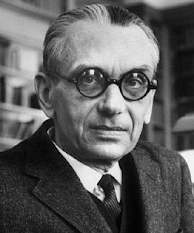
Gödel's reasons for an afterlife

Alexander T. Englert, “We'll meet again,” Aeon , Jan 2, 2024, https://aeon.co/essays/kurt-godel-his-mother-and-the-a...